
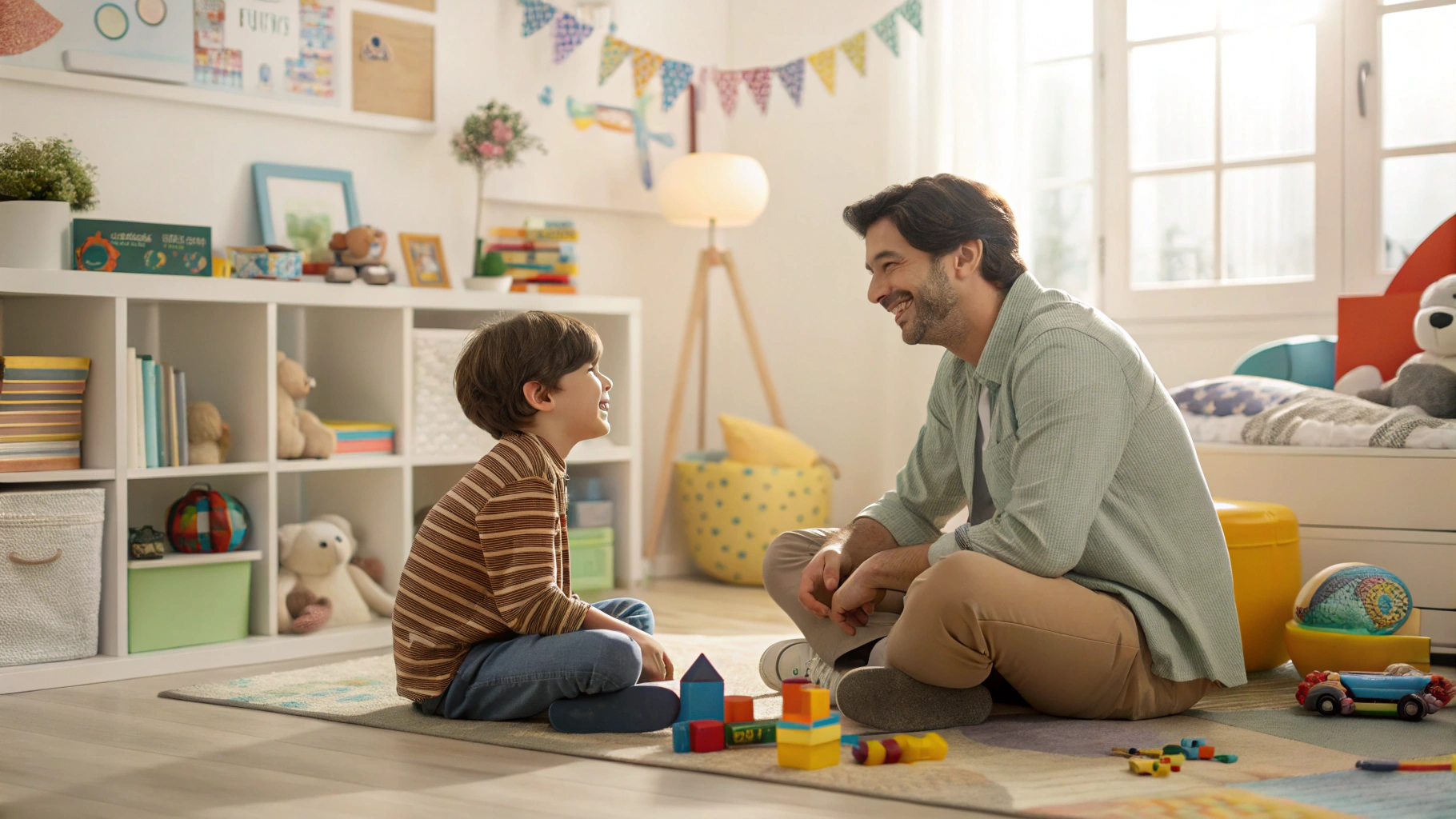
Stubbornness in children is often misunderstood as simple defiance. However, in the world of child psychology, it is frequently a sign of a “strong-willed” personality—a trait that, if nurtured correctly, leads to independence and strong leadership in adulthood. The challenge for parents is getting through the day without every request turning into a battle of wills.
1. Connect and Build a “Bridge” Before You Direct
Most power struggles happen because we shout instructions from across the room. Before you ask your child to do anything, physically move to them. Get down on their level so you are eye-to-eye. This simple act of “connecting” before “directing” signals to the child that they are respected, making them far more likely to listen to your request.
2. The Psychology of Two Choices
Stubborn children crave autonomy. If you tell them “Put on your coat,” they hear a command and their instinct is to push back. Instead, give them the “Power of Two.” Ask: “Do you want to wear your red coat or your blue coat?” In both scenarios, the coat gets put on, but the child feels like they made the decision.
3. Use the “When… Then…” Technique
Traditional “If/Then” statements (like “If you don’t clean up, no TV”) sound like threats. Rewording this to “When… Then…” creates a logical sequence. “When your blocks are back in the box, then we can start the movie.” This places the responsibility for the reward squarely on the child’s actions.
4. Listen to the “No” Behind the Behavior
Sometimes a child is stubborn because they feel overwhelmed or unheard. If they refuse to leave the park, acknowledge their feelings: “It’s really hard to leave when you’re having so much fun on the swings, isn’t it?” Often, once a child feels their “big feelings” are validated, the need to fight disappears.
5. Stay Calm: You are the Thermostat, Not the Thermometer
If your child’s temper rises to 100 degrees, and you rise with them, the situation will explode. Your job is to set the temperature of the room. By staying calm and using a steady, low voice, you prevent the situation from escalating into a full-blown tantrum.
6. Establish Consistent Routines
Stubbornness often flares up during transitions. Having a visual or verbal routine (like a “Bedtime Chart”) takes the “bossiness” away from the parent and puts it on the schedule. You aren’t the one telling them to brush their teeth; the chart says it’s time!
7. The Power of “Creative Outlets” to Reset the Brain
When a child is stuck in a “stubborn loop,” their brain is often overstimulated. This is where coloring books serve as an essential parenting tool. The repetitive, rhythmic motion of coloring helps a child shift from their “defensive” brain to their “creative” brain. By introducing a coloring session during a tense afternoon, you are giving their nervous system a chance to reset. A child who has spent 15 minutes focusing on a beautiful coloring page is much more relaxed and cooperative than one who has been fighting for control all day.
“At the end of a wonderful day like this, reward your child’s cooperation and creativity with a coloring book full of inspiration and excellence like this one.”