
In 2026, the “digital struggle” is the number one complaint among parents. We know that too much blue light can interfere with sleep, focus, and emotional regulation, but how do we break the habit without a total household meltdown? If your child is glued to the tablet, here are the fastest ways to pull them back to the real world and engage their minds.
1. The “1-for-1” Creative Rule
Instead of banning screens entirely—which often makes them more “forbidden and tempting”—implement a “1-for-1” rule. For every 30 minutes of tablet time, the child must complete 30 minutes of a high-value offline activity. This teaches children that digital entertainment is a privilege that comes after creative or physical effort.
2. Create “Digital-Free” Sanctuaries
Designate specific areas of the house—like the dining table and the bedrooms—as strictly no-phone zones. This encourages family bonding and ensures that the hour before sleep is dedicated to winding down the brain naturally. Removing the “temptation” is often much easier than fighting the “urge” every single hour.
3. Use a Visual Countdown
Children struggle with the concept of “5 more minutes”. To them, that could mean forever or just a second. Use a visual kitchen timer or a sand timer. When the child can see the time running out, the transition away from the screen is much smoother because they have had time to mentally prepare for the change.
4. Be the Ultimate Role Model
It is impossible to convince a child to put down their device if they see you scrolling through your phone during dinner. Set a “Family Tech Break” where everyone—parents included—puts their devices in a charging basket for an hour. Your children will value their “unplugged” time more if they see you enjoying yours.
5. Replace “Passive Consumption” with “Active Creation”
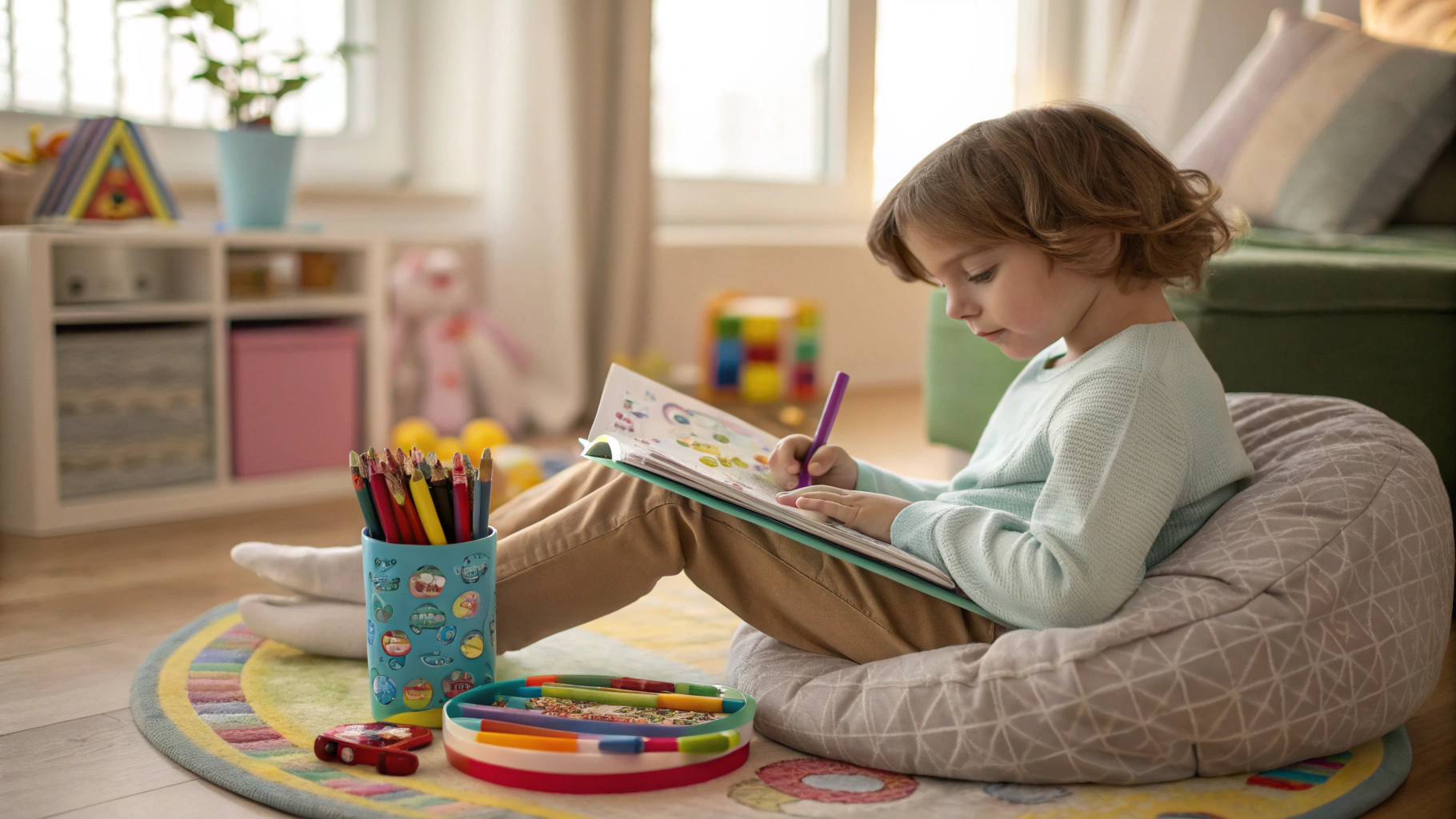
The hardest part of reducing screen time is filling the “boredom gap”. This is where many parents fail because they don’t offer an alternative that is as stimulating as a screen. This is why high-quality coloring books are the perfect solution.
Unlike watching a video, which is a passive activity that can lead to “digital fatigue” and irritability, coloring is an active, brain-building task. The benefits of coloring include:
- Developing Fine Motor Skills: Holding crayons and staying within lines strengthens the muscles in the hands.
- Reducing Anxiety: The repetitive, rhythmic motion of coloring is naturally meditative and lowers stress levels.
- Boosting Creativity: It allows children to lead the process, choosing colors and expressing their imagination.
Ready to swap the tablet for a set of crayons? You can find our specially designed, interactive coloring books that keep children engaged for hours—without the blue light—at our store below.
[Click here to visit my Payhip Store and discover the perfect coloring book for your child!]